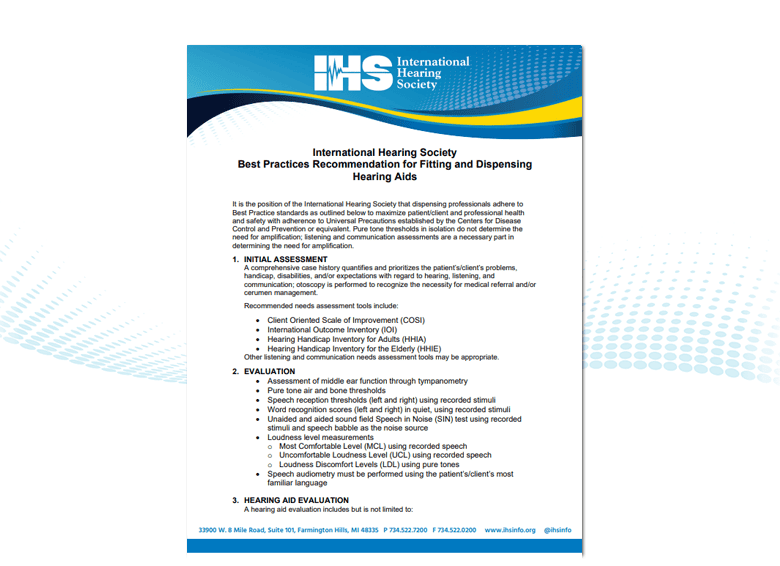
Complete control over the process of introducing any instrument or tool into the ear canal is paramount to patient/client safety. Instruments that you may insert into the ear canal include but are not limited to: otoscope; earlight and tips; otoblock; impression material syringe or gun; probe tubes; disposable audiometric eartips; or tympanometry tips. Caution, skill, and training are required to reduce risk and ensure that the process is safe for patients/clients.
The following “bridge-and-brace” technique is a clinical practice guideline recommended by the International Hearing Society.
- Both hands and the instrument act as a unit and at least one hand must be in contact with the patient’s/client’s head.
- One hand serves as the bridge and is placed on the side of patient’s/client’s head in proximity to the ear.
- One hand holds the instrument steady and is placed in either firm contact with the patient’s/client’s head or securely in contact with the non-instrument hand.
- This technique ensures that hands, head, and instrument act as a single unit to prevent accidental damage or injury to the ear.
Examples of acceptable bracing techniques are shown in the following photos.
Examples of Bracing Techniques
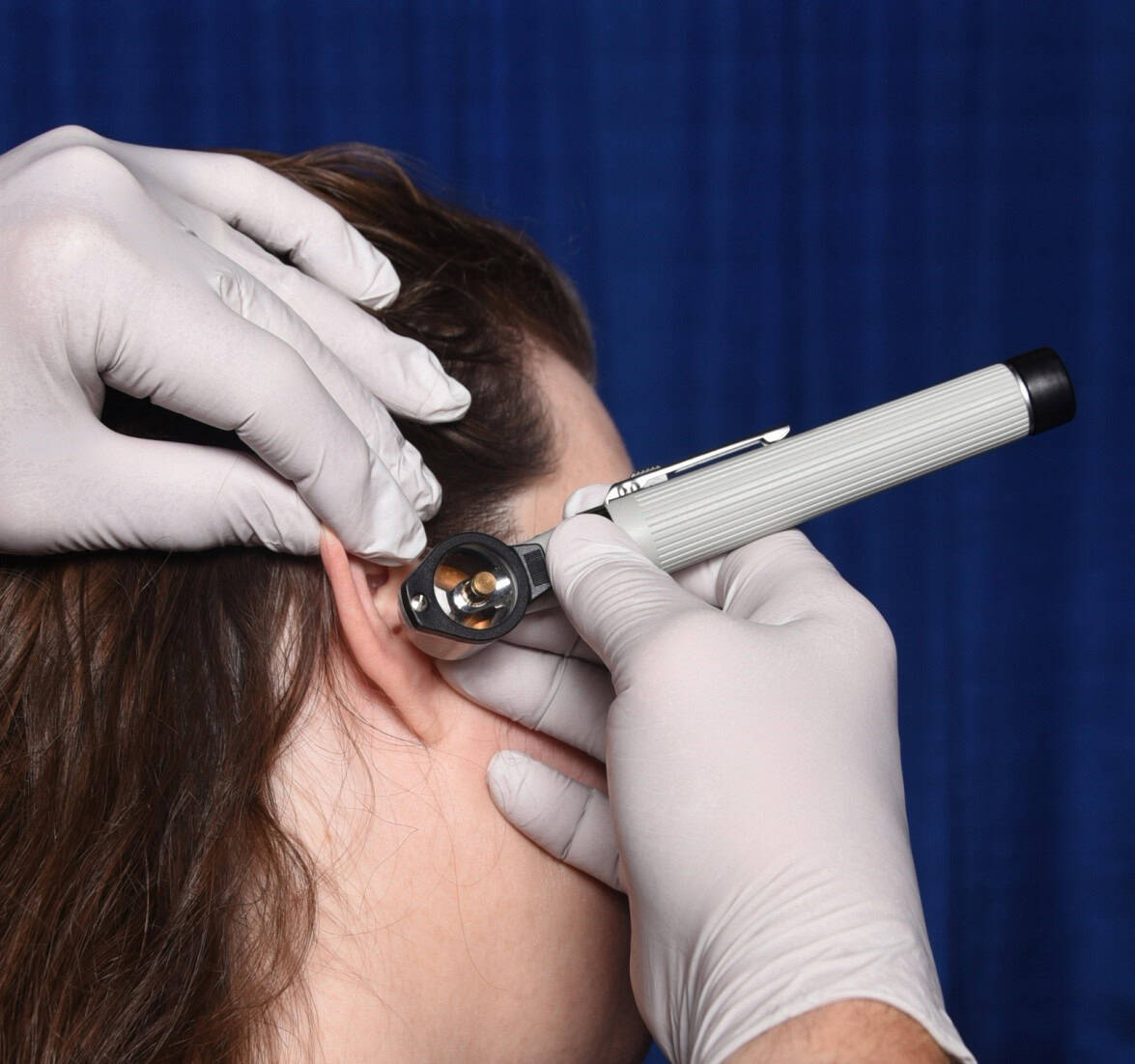
Bracing for Otoscopy: Otoscope Handle Up
Note how the fingers of the instrument hand brace against the cheek, while the fingers of the non-instrument hand both brace against the head and also pull the pinna up for viewing.
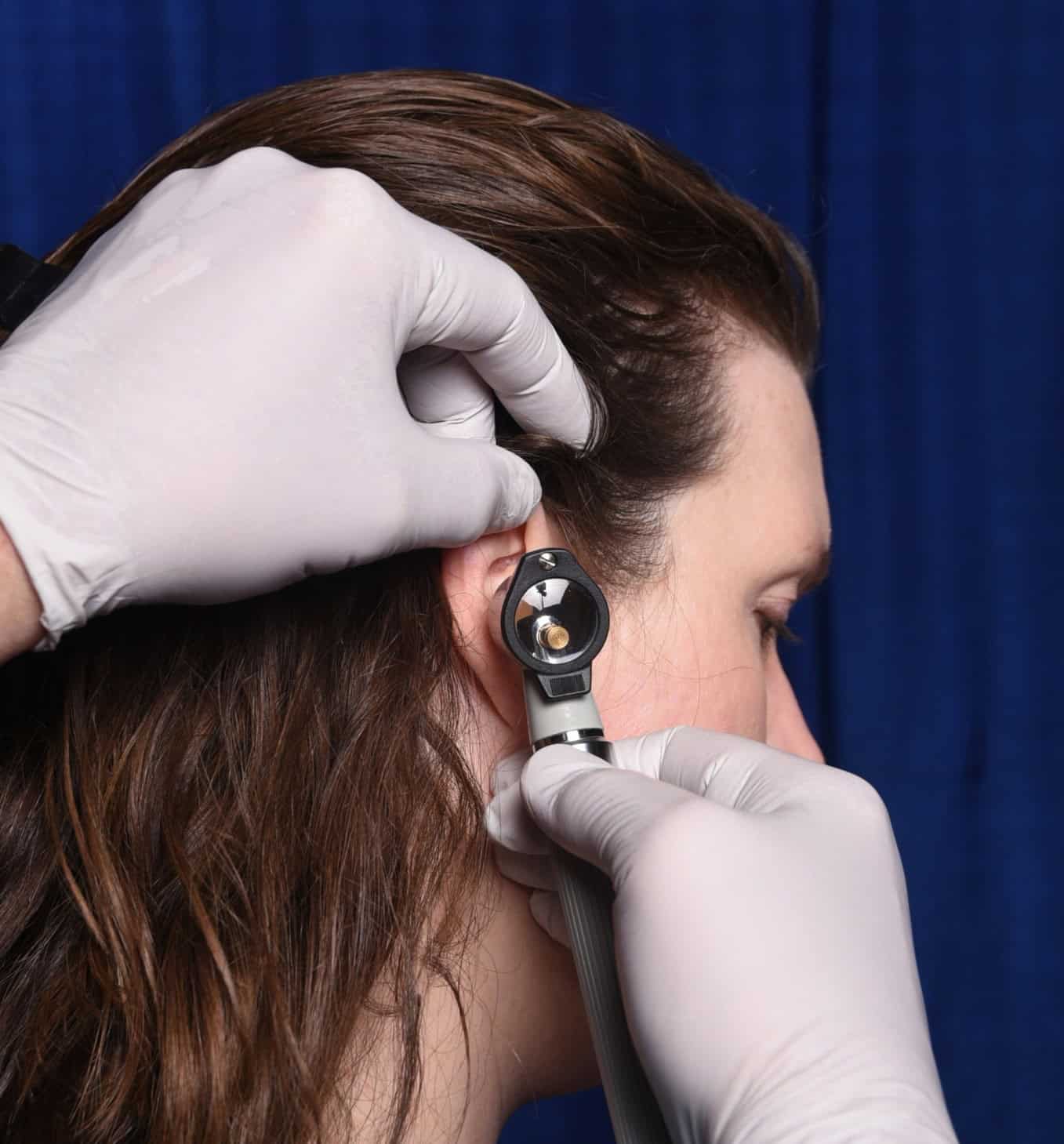
Bracing for Otoscopy: Otoscope Handle Down
Again, the two hands perform the same bracing as in the previous example, though the positioning is slightly different.
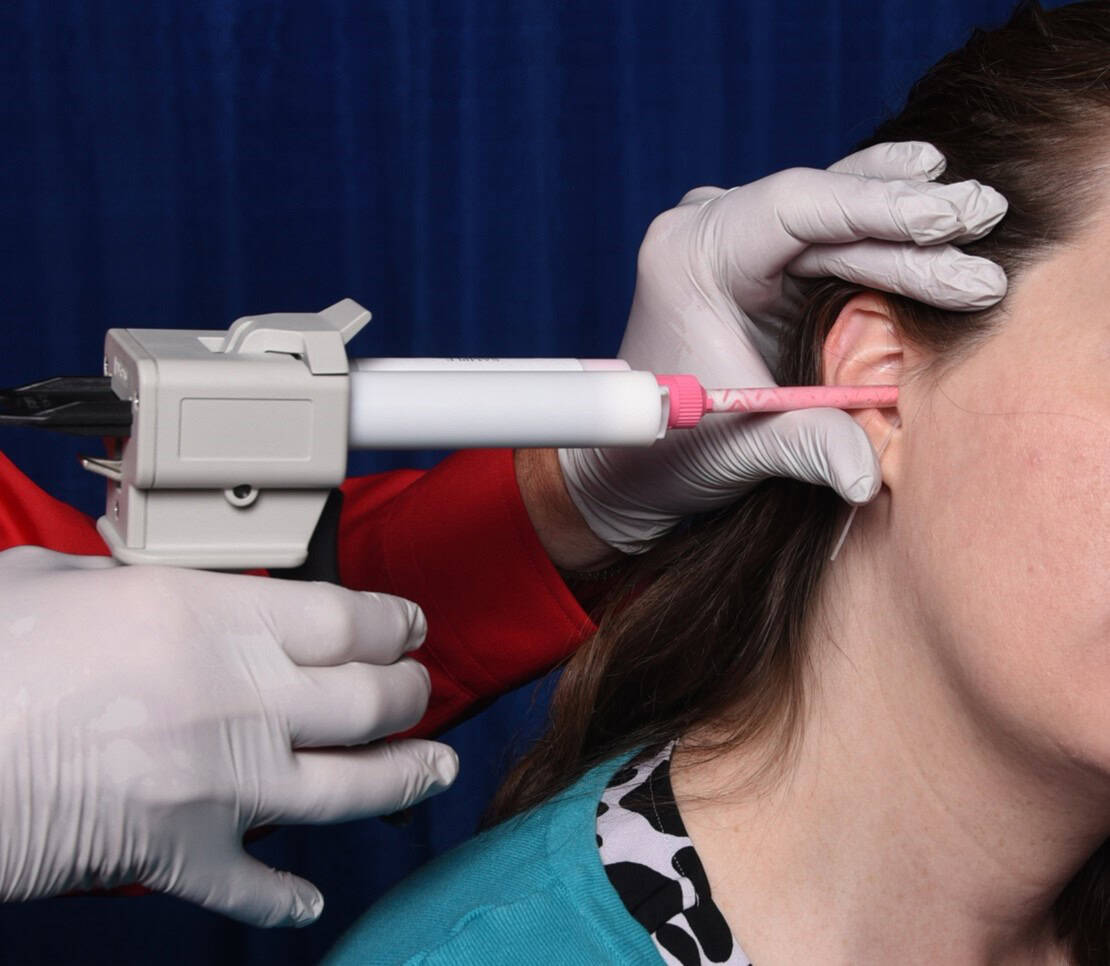
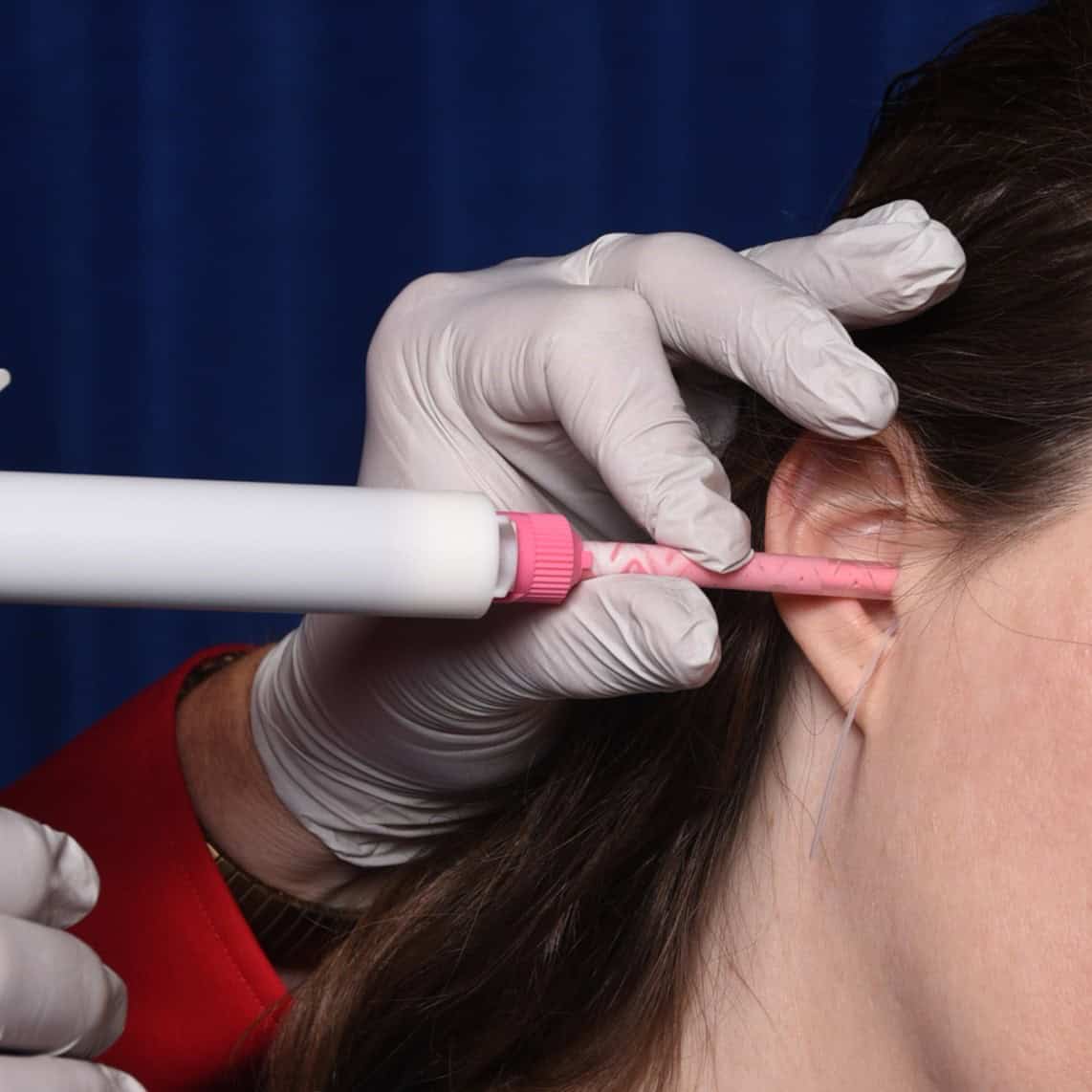
Bridging and Bracing with Impression Gun
The impression gun’s size prevents using the instrument hand for bracing, so the tip is firmly in contact with the thumb of the non-instrument hand. It serves as a bridge, while the fingers brace the head above the pinna.
Two-Fingered Bridge with an Impression Gun
Some jurisdictions call for two-fingered contact on the gun tip. Be aware that this procedure restricts visibility into the concha as impression material is being delivered.
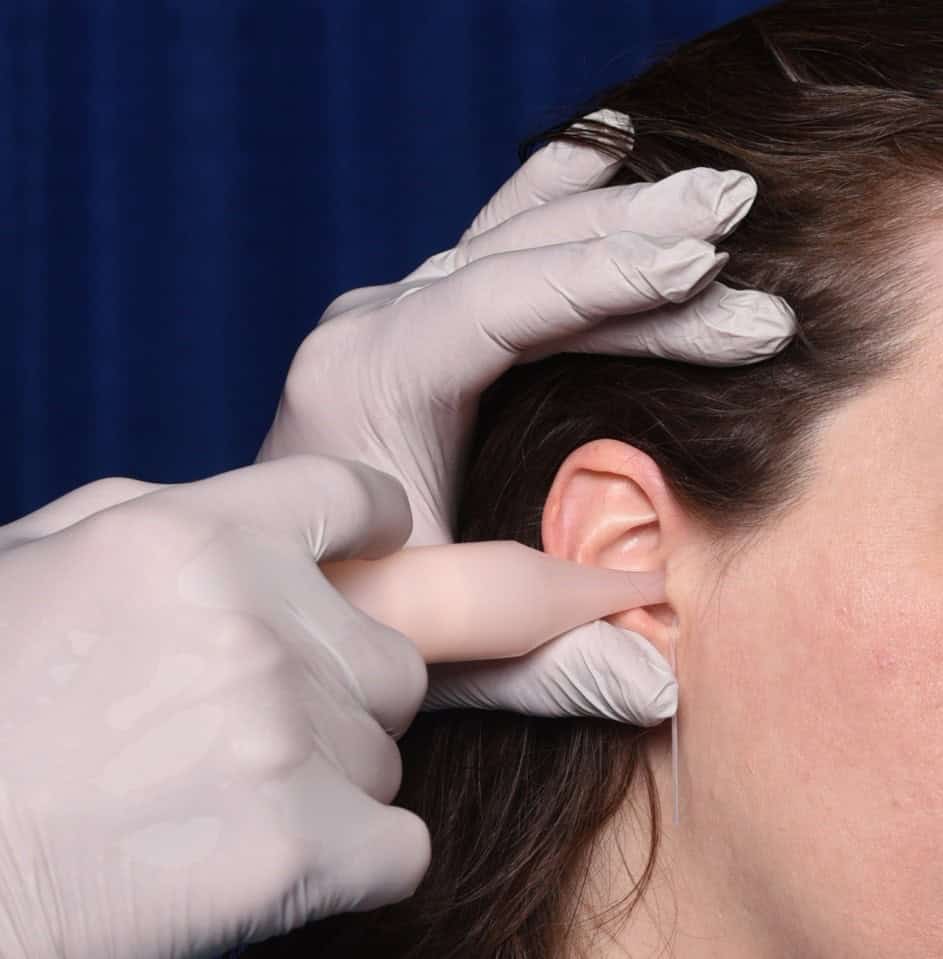
Bridging and Bracing with Syringe
Bridging and bracing for the syringe is much the same as for the impression gun. The thumb of the non-instrument serves as the bridge.
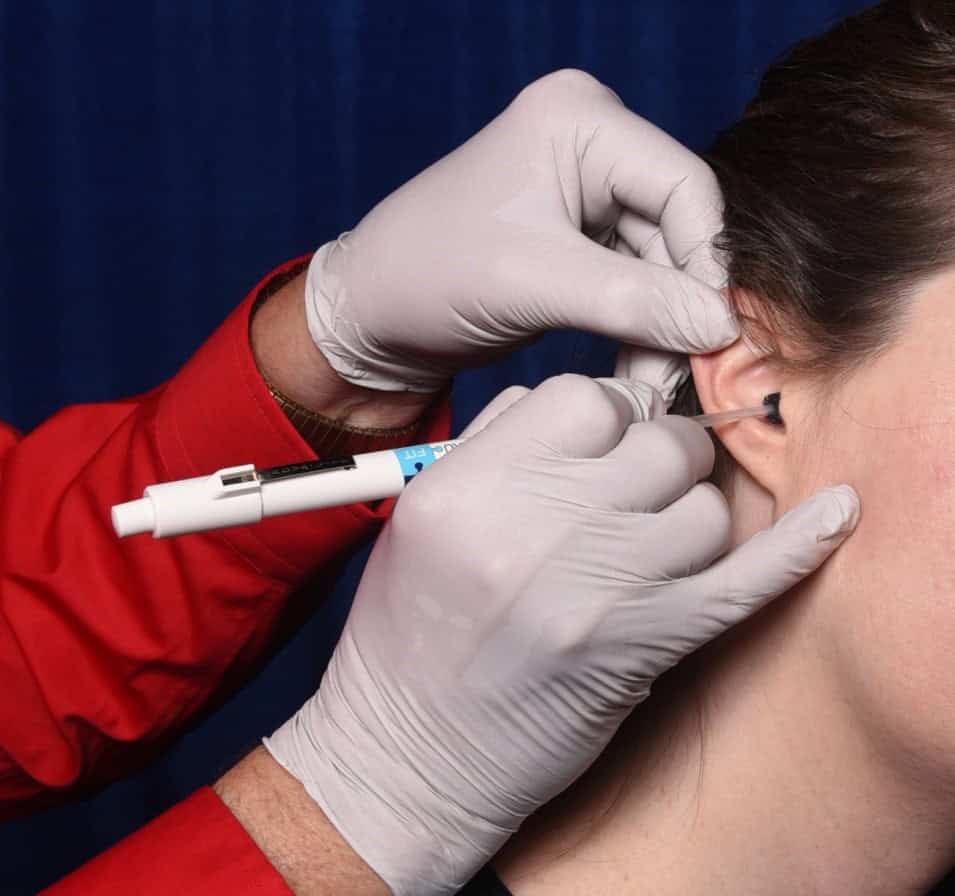
Bracing for Block Placement
When bracing for insertion of an otoblock, the instrument hand holds the otolight and firmly places a finger against the cheek. The fingers of the non-instrument hand pull up on the pinna while bracing against the head above and behind the pinna.
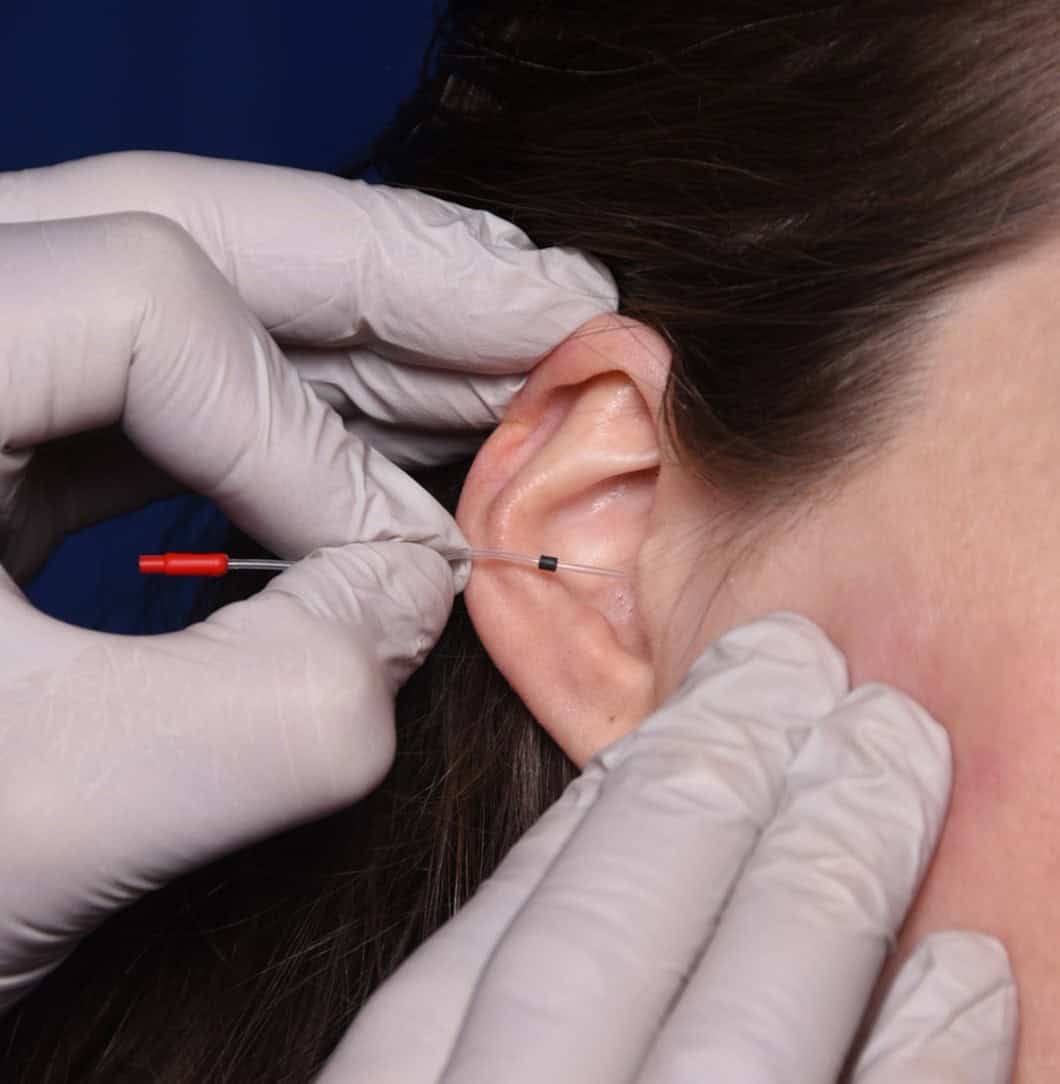
Bracing for Probe Tube Placement
When inserting a probe tube, one hand firmly braces against the cheek while the other braces above the pinna and gently inserts the tube. The black ring will lie in the intertragal notch when the tube is inserted to the correct depth.
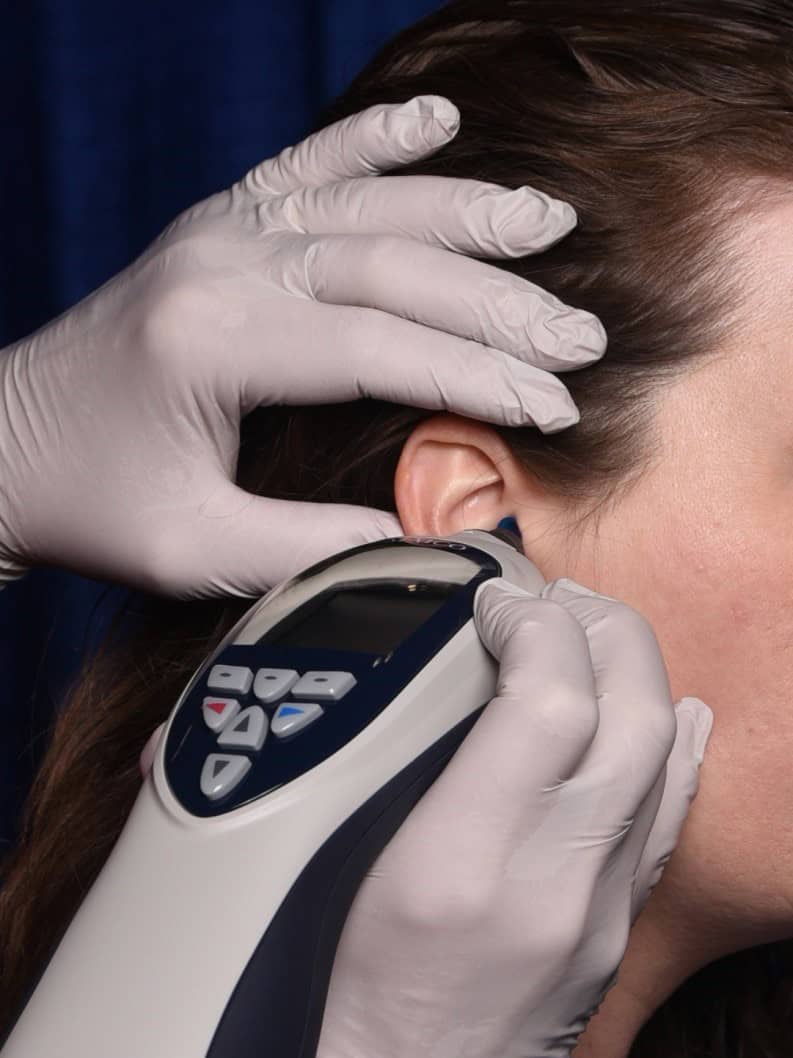
Bracing for Hand-Held Tympanometer
A hand-held tympanometer is braced much the same as an otoscope. The instrument hand braced against the cheek while placing the device in the ear canal, while the non-instrument hand braces above the pinna.